

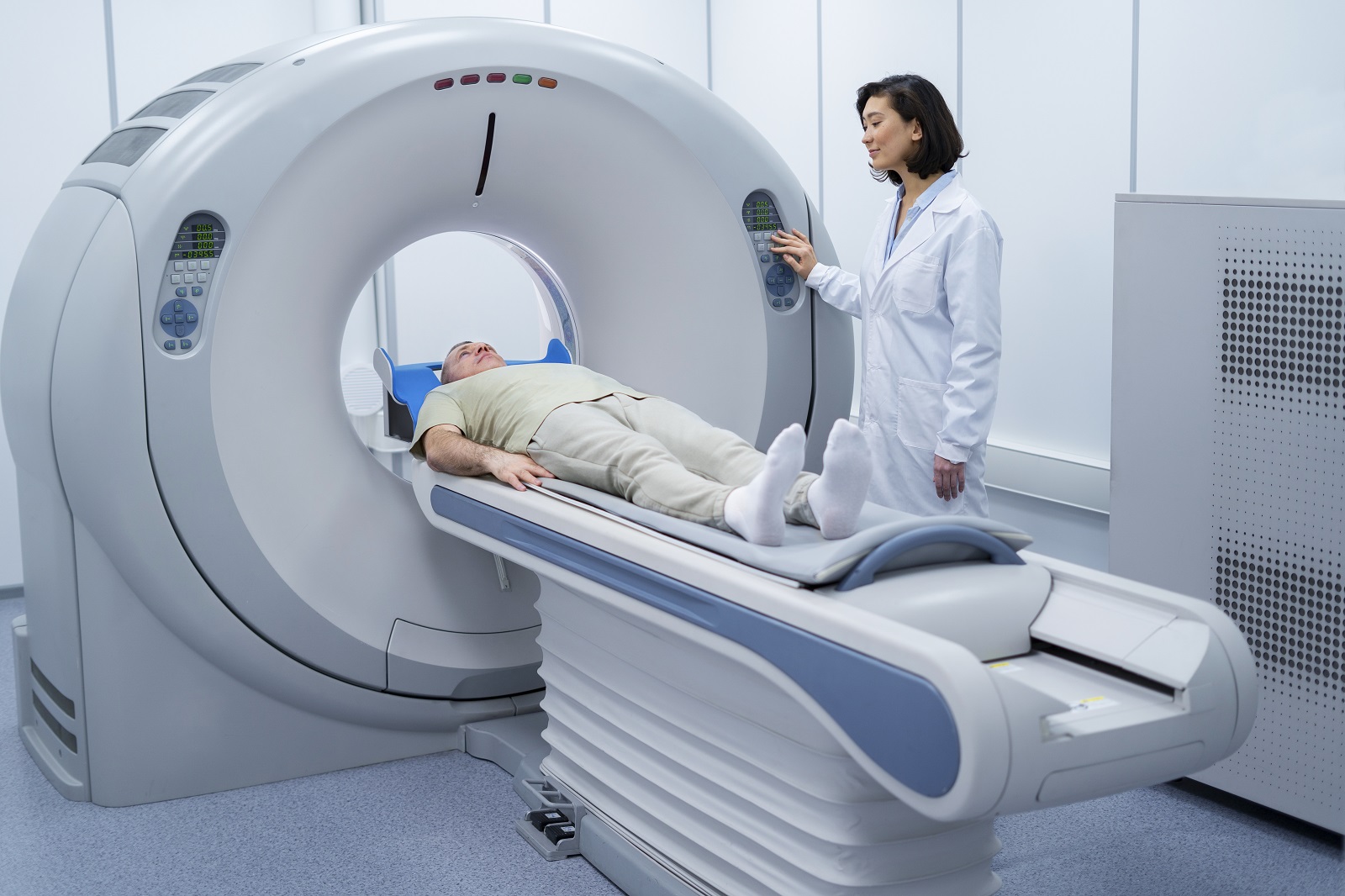
Magnetic Resonance Imaging (MRI)
What is Magnetic Resonance Imaging (MRI)?
Magnetic Resonance Imaging (MRI) is a method that provides detailed images of organs and tissues in the body. Using radio waves and a strong magnetic field, the images obtained play an important role in the diagnosis of diseases.
Why is Magnetic Resonance Imaging (MRI) Performed?
MRI is used in the diagnosis of brain, spine, joints, heart, and internal organ diseases. It is also preferred for the evaluation of tumors, bleeding, vascular diseases, and musculoskeletal system problems.
How is Magnetic Resonance Imaging (MRI) Performed?
Before the procedure, the patient must not have any metal objects on them. The patient wears a special gown, lies on the examination table, and is asked to remain still inside the device. The duration of the scan may vary depending on the area being examined.
What are the Advantages of Magnetic Resonance Imaging (MRI)?
• It does not contain radiation.
• Provides detailed imaging of organs and tissues.
• A reliable method for the early diagnosis of diseases.
What Should Be Done Before an MRI Scan?
• Remaining still during the scan is important for accurate results.
• Metal jewelry and accessories must be removed.
• In some cases, such as children or patients with claustrophobia, anesthesia may be applied if necessary.